Geese’s Master Pieces“I never thought for a second I’d be moving this quickly.”
Wubsoofer Music“I’m able to compose proper songs.”
Maple ColossusReleased Summer.exe
Felix LyroReleased Crumbling Ruins
Keyiano“It feels really freeing to finally bring my ideas to life.”
BeancentReleased Electromagnetism
These are Best Music Coach coaching clients, who worked with a coach one to one and in small groups. They are coaching results, not reviews of this course. Faces, names and results as published on bestmusiccoach.com/results.
What You Get
Everything you need to turn advanced theory into ideas you can use
About 38 minutes of video lessons
10 lessons, in order
Short lessons with one usable tool each
A composition assignment in every lesson
Alto clef reading for orchestral scores
Lifetime access, come back any time
Instant access by email the moment you check out
Start today, keep it for life
Level
Intermediate
Format
Online video course, self-paced
Video lessons
About 38 minutes
Lessons
10 lessons
Access
Lifetime access
Delivery
Instant access by email, nothing ships
Price
$100.00 $85.00 one-time payment, 15% off until Oct 31, 11:59 pm ET
You have music in your head, but when you sit down to compose, it comes out basic, flat, or unfinished.
You start strong, then your idea gets stuck in an 8-16 bar loop.
Music Theory Level 4 takes everything from Levels 1-3 and turns it into intermediate tools you can actually use: grooves, odd meter, modes, whole tone color, diminished tension, and practical score-reading confidence.
When rhythms feel stiff, you learn how to make 16th-note patterns move.
When harmony feels generic, you learn modes and color choices.
When ideas stall, each lesson gives you a small composition assignment.
You are ready if
This sounds like you.
You have half-finished ideas that never get past the cool-loop stage.
You dabbled before, maybe posted a few tracks, but cannot compose consistently.
You used to make music, lost momentum, and feel rusty every time you open your DAW.
You struggle with modes, odd meters, advanced scales, and theory names.
You want your music to feel original, emotional, and game-ready.
After Level 4
You will be able to.
Compose grooves with 16th-note patterns that move instead of feeling robotic.
Use 5/4, 7/4, and other odd meters without confusing the listener.
Use modes to create mysterious ruins, hopeful towns, and tense boss arenas.
Use whole tone and diminished scales for mystery, tension, and “what happens next” moments.
Read and notate in alto clef so viola and orchestral scores feel less scary.
Inside the course
Short lessons. Specific tools. Composition assignments.
Each module gives you one usable theory tool and a clear way to test it inside your own music.
01
Sixteenth Notes That Groove
Divide the beat, combine 16ths and 8ths, and build syncopation that feels alive instead of random.
02
Odd Meter That Still Feels Good
Use 5/4, 7/4, 11/8, and grouped beats so the listener can still feel where the pulse lives.
03
Relative Modes
Compose short sketches with Ionian, Dorian, Phrygian, Lydian, Mixolydian, Aeolian, and Locrian.
04
Parallel Modes and Mode Mixture
Shift color inside one piece so C major, C Dorian, C Phrygian, and C Lydian become practical choices.
05
Harmonic and Melodic Minor Worlds
Apply modal thinking to harmonic and melodic minor for more exotic, emotional soundtrack colors.
06
Whole Tone Scales and Augmented Chords
Use whole tone sound for mystery, deception, dream sequences, and unstable musical moments.
07
Diminished Scales
Use whole-half and half-whole diminished scales to create high-tension passages that still make sense.
08
Alto Clef For Composers
Get comfortable enough with alto clef that viola parts and orchestral score reading stop feeling scary.
All along the way you get concrete assignments: 30-second sketches, mode studies, groove studies, and small compositions you can share in the community for feedback.
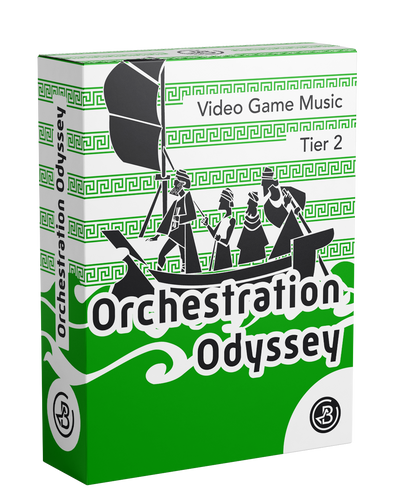
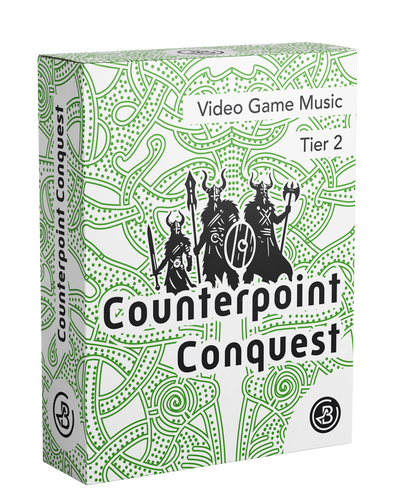
This course also sets you up for Counterpoint Conquest and Orchestration Odyssey.
How To Start
Start in three steps
Step 01
Buy the course
Click Buy Now and pay once through secure checkout.
Step 02
Check your email
Your course access arrives by email the moment you check out.
Step 03
Start with sixteenth notes
Each lesson ends with a small composition assignment.
Full Curriculum
See all 10 lessons before you buy
Expand to see the full curriculum
MT4 | Music Theory 4 Intro
MT4 1 Sixteenth notes
MT4 2 Odd Meter
MT4 3 Modes 1
MT4 4 Modes 2
MT4 5 Modes 3
MT4 6 Whole tone scale + Chords
MT4 7 Diminished Scale 1 Whole Half
MT4 8 Diminished Scale 2 Half whole
MT4 9 Alto Clef
Student Stories
Hear what changed for our students
Best Music Coach coaching clients, in their own words.
“It felt like being in a dark room and finally turning on the lights.”
McCatterCoaching client
“Being able to sit down and create music at professional level quality fills me with a lot more confidence.”
Rhythm GruntCoaching client
“I was shocked by how much my music evolved in just two weeks.”
Michaël A.Coaching client
These are Best Music Coach coaching clients, who worked with a coach one to one and in small groups. They did not buy this course. Quotes, photos, the video as published on bestmusiccoach.com/results.
From Dan's Discord and YouTube
What clicked for students and viewers
Their own posts: screenshots from Dan's Discord and public comments on his YouTube videos.
Sladen57, posted in Dan's Discord, August 2025Phantasmic, posted in Dan's Discord, August 2025akumamon, posted in Dan's Discord, August 2025SodiePop757, posted in Dan's Discord, August 2025Sp4rk, posted in Dan's Discord, August 2025Airborne, posted in Dan's Discord, August 2025
hey! wanted to comment cause your videos are by far the best in the "actually understanding how songs work" department. there are many and i mean MANY videos attempting to explain music theory but like 90% of them are either a bunch of music theory lingo with no real clean explanation or "idk move notes around + maybe some tips". your videos are the first ones ive ever seen where i do end up absorving valuable information
@CrowleesCult on YouTube, May 2026Comment on Dan's video "Modes for Video Game Music" (Video Game Music Composer)
I like hearing the specifics of why songs like this work/function/theory behind it.
@loopymachoopin2262 on YouTube, 2024Comment on Dan's video "10 Things Prove 'Once Upon a Time' from Undertale Is Great" (Music Theory for Gamers)
Discord posts were made during Dan's live 2-day beginner composing challenge (August 2025), about that challenge. YouTube cards are public comments on the named Dan video, quoted as posted (excerpts marked); the date is what YouTube showed when the comment was read on October 1, 2026. Not reviews of this course. Handles as posted.
Compare
Pick the right course for your next goal
See how Music Theory Level 4 fits next to the courses around it, then pick your next step.
Click Buy Now and check out. Your course access arrives by email the moment you check out, so you can start lesson 1 today.
Do I need to finish Levels 1 to 3 first?
You should already be comfortable with basic notation, major and minor scales, triads and simple rhythms.
If you have taken Levels 1 to 3 or have equivalent experience, you are ready.
If you still get lost naming notes on the staff, start with earlier levels.
I have never finished a full track. Is this too advanced for me?
If you understand basic theory but struggle to turn ideas into finished pieces, this is exactly the right level.
The lessons are intermediate, but each one ends with a small, clear assignment so you can apply it immediately to your own music.
Will this help with video game music specifically?
Yes. Many examples and assignments are built around game music.
You will learn how to use modes, odd meter, whole tone and diminished scales to create the exact emotions you hear in real soundtracks.
What if I mostly work with samples and loops?
Level 4 helps you understand why the loops you love work, and how to build your own, so you can move from dragging preset loops to composing original material in your own style.
How long do I have access to the course?
You get lifetime access, so you can come back, review and use the lessons whenever you need them.
How long does it take to complete Music Theory Level 4?
Music Theory Level 4 is self-paced. The core video lessons are about 38 minutes total.
Calendar time depends on how many focused hours you put in each week.
At about 3 hours per week, plan on under a week for the video lessons, plus extra time to do the exercises and apply the material.
What if I have already done college music theory?
If you did theory on paper but never learned to turn it into finished tracks, you will still get a lot from Level 4.
This course is about using theory musically, not just passing exams.
What if English is not my first language?
The teaching is clear, visual and example‑heavy. As long as you can follow normal YouTube videos in English, you can follow this course.
Can I get a refund?
No. This course is not refundable, so ask before you buy if you are not sure it fits. Email support@bestmusiccoach.com and we will help you choose.
Can I pay in installments?
Yes, on eligible orders. At checkout you can choose Shop Pay Installments or Afterpay to split the payment.
Dan Spencer coaches Music Theory Level 4 from the practical composer and music-mentor perspective.
Learn the idea, try it in music, finish the assignment, and know the next move when you sit down to compose.
Dan Spencer is Music Mentor Dan: a composer, OST creator, and coach who teaches the practical path from idea (or no ideas!) to finished music you can actually ship.